
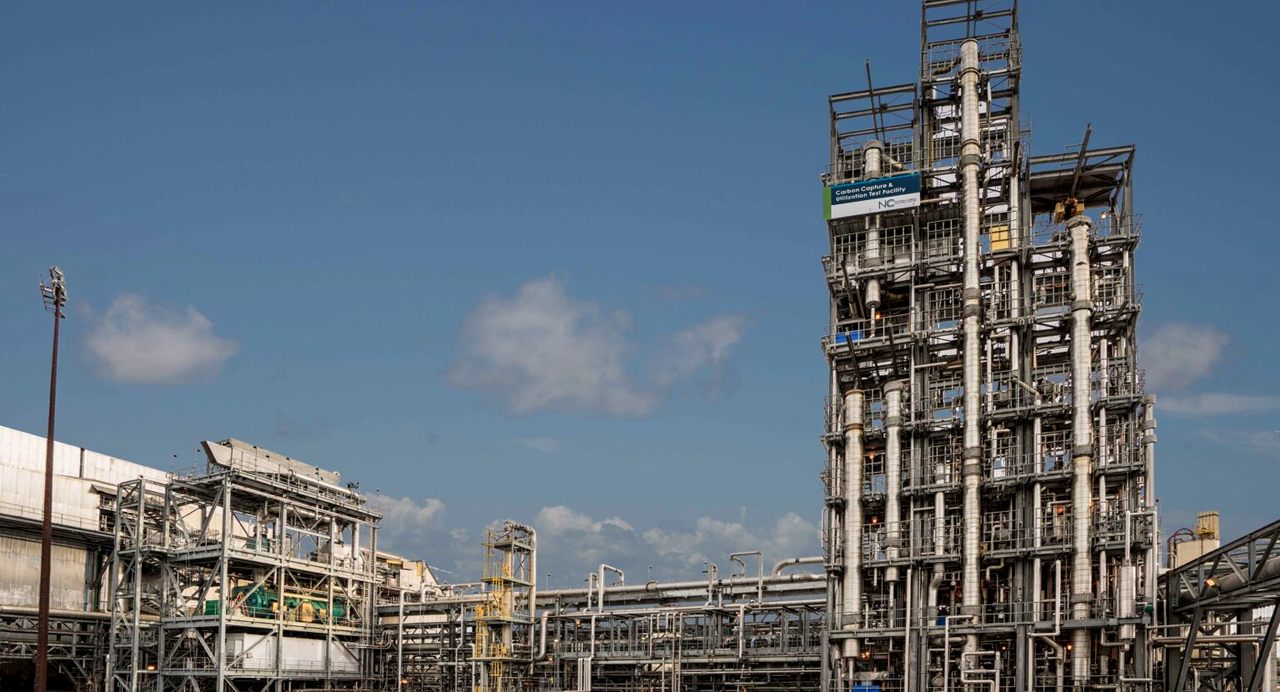
When the promise of a cleaner future collides with the concerns of a small Texas community, America faces a question that extends far beyond carbon capture:
Who gets the benefits of progress, and who is expected to bear its risks?
The Other Side of America's Energy Transition
America is in the midst of one of the most consequential transformations of its energy infrastructure in generations. Billions of dollars are being invested in renewable energy, battery storage, carbon capture, hydrogen production, transmission infrastructure, and technologies designed to reduce greenhouse gas emissions while meeting the nation's rapidly growing electricity demands.
These investments are essential to America's economic competitiveness, energy security, and our environmental future. But beneath the excitement surrounding technological innovation, capital investment, and economic development lies a question that deserves far greater public attention:
Who benefits from America's energy transition, and who is being asked to live with the risks?
It is a question that becomes especially important when major industrial projects are proposed in communities that have historically had limited economic resources, political influence, or meaningful participation in decisions affecting their neighborhoods.
And today, that question is being raised in Cheek, Texas.
Cheek, Texas: A Small Community Confronts a Major Energy Project
Cheek is a small, predominantly Black community in Southeast Texas, near Beaumont. It is not a community accustomed to commanding national headlines or influencing multibillion-dollar energy investment decisions.
Yet its residents now find themselves confronting one of the most consequential questions surrounding an emerging climate technology: the permanent underground storage of carbon dioxide.
ExxonMobil is advancing its Rose Carbon Capture and Storage Project, designed to inject approximately 53 million metric tons of carbon dioxide over 13 years through three underground injection wells.
The premise is straightforward. Rather than allowing carbon dioxide from industrial operations to enter the atmosphere and contribute to global warming, the gas can be captured, transported, and permanently stored in suitable underground geological formations.
Supporters argue that carbon capture and storage can play an important role in reducing emissions from industries that are difficult to decarbonize, including petrochemicals, cement, steel, and other industrial processes.
But for residents of Cheek, the discussion is not simply about reducing carbon emissions. It is about what happens beneath their homes, near their water supplies, and within the community where they live. Residents have expressed concerns about groundwater contamination, the possibility of carbon dioxide escaping into the atmosphere, and whether local emergency responders would be adequately prepared for a serious incident.
Those concerns should not be dismissed as resistance to innovation or a lack of understanding of modern energy technology. They are legitimate questions about public safety, emergency preparedness, environmental protection, and the responsibilities of corporations undertaking projects with potentially long-lasting consequences.
And they deserve substantive answers.
A Regulatory Approval That Did Not Resolve the Controversy
On September 15, 2026, the Texas Railroad Commission approved ExxonMobil's Rose Carbon Capture and Storage Project by a 2–1 vote. Commissioner Wayne Christian opposed the permit, expressing concern that the regulatory record had not adequately established the project's long-term safety.
The Cheek Texas Community Association subsequently sought reconsideration of the decision, challenging aspects of the project's safety and environmental protections. The commission scheduled the motion for rehearing for its November 17 meeting.
Following that meeting, the Gulf Coast CCS Alliance, an industry organization that includes ExxonMobil among its members, announced that the Rose Project had received final approval. The alliance described the decision as an important milestone for carbon capture development in Texas and emphasized the project's potential economic and industrial benefits.
As of publication, the Texas Railroad Commission had not officially issued its own public order resolving the issue.
Nevertheless, the regulatory developments highlight an important distinction between what government agencies consider legally permissible and what affected communities consider acceptable. That distinction became particularly evident during the September proceedings.
According to reporting by The Texas Tribune, Railroad Commission Chair Christi Craddick publicly criticized ExxonMobil after hearing complaints that communication with residents had deteriorated following their decision to obtain legal representation. She urged the company to provide more information and support to the community.
Yet she ultimately voted to approve the permit.
That moment raises an important question: If regulators recognize shortcomings in community engagement, should those shortcomings be addressed before a project advances?
It also illustrates an important distinction.
A project can satisfy the requirements for regulatory approval while still failing to earn the confidence of the people who will live closest to it. It does not, by itself, establish public trust.
The permit settled the legal question. It did not settle the argument.
In Cheek, the questions extend beyond whether the proposed carbon storage project satisfies technical permitting standards. They include whether residents understand emergency response procedures, whether local first responders have the training and equipment necessary to address a carbon dioxide release, and whether independent monitoring information will be publicly accessible.
They also include who would be financially responsible for damages, remediation, or long-term monitoring if problems emerge years after injection operations have ended.
These questions deserve clear, documented answers.
Carbon Capture: Climate Solution or Community Risk?
Carbon capture and storage is neither a technology that should be rejected outright nor one that should be accepted without scrutiny. Its potential contribution to reducing industrial greenhouse gas emissions is significant, particularly where cleaner alternatives remain technically difficult or economically challenging.
But the technology also presents risks that must be carefully evaluated and managed.
Carbon dioxide is not inherently toxic at ordinary atmospheric concentrations. However, high concentrations can displace oxygen and create dangerous, potentially fatal conditions. Elevated concentrations can also have direct physiological effects.
A significant release from carbon dioxide transportation or injection infrastructure could present serious hazards, particularly where gas accumulates in low-lying areas or confined spaces.
Underground storage also requires careful geological evaluation, well integrity, pressure management, monitoring, and long-term oversight to minimize the risk of leakage or impacts on underground sources of drinking water.
These are not reasons to abandon carbon capture.
However, they are reasons to insist upon rigorous engineering standards, independent scientific review, effective regulation, and comprehensive emergency response planning. The consequences of carbon dioxide infrastructure failures are not merely theoretical.
In February 2020, a carbon dioxide pipeline ruptured near Satartia, Mississippi, resulting in evacuations and medical treatment for dozens of people. That incident involved a pipeline rather than an underground storage reservoir, an important technical distinction. Nevertheless, it demonstrated the serious emergency response challenges that a major carbon dioxide release can create.
ExxonMobil maintains that its Rose Project is designed to meet applicable safety and environmental requirements. That position deserves consideration. But corporate assurances and regulatory approvals, while important, are not substitutes for public trust.
The burden should be on project developers and regulators to demonstrate that risks have been responsibly assessed, minimized, and communicated—not on residents to prove that their concerns deserve attention.
Environmental Justice: An Uncomfortable American History
The controversy in Cheek also raises a question that America has struggled with for generations.
Why do so many communities with limited economic and political influence find themselves confronting difficult choices involving industrial development, environmental exposure, and public health?
Historically, low-income communities and communities of color have often experienced disproportionate exposure to industrial pollution and environmental hazards. These patterns are not necessarily the result of a single deliberate decision to target a particular racial or economic group.
They can also emerge from decades of land-use policies, industrial zoning, historical segregation, unequal property values, limited political representation, and cumulative industrial development. But the consequences can be substantial regardless of how those patterns developed.
The experiences of communities across America's industrial corridors raise serious questions about the relationship between industrial growth, neighborhood conditions, and community influence.
Each situation must be evaluated on its own merits and evidence. It would be irresponsible to assume that every industrial development represents intentional discrimination. It would be equally irresponsible to ignore the historical patterns that make these questions necessary.
In Cheek, the racial and economic composition of the community should not automatically determine our conclusions about ExxonMobil's motivations. But neither should it be treated as irrelevant.
The appropriate questions are whether alternative sites were evaluated fairly, whether cumulative environmental burdens were considered, whether residents had meaningful opportunities to influence the process, and whether the community will receive protections proportionate to the risks it is being asked to accept.
Environmental justice is not about opposing development because of where it occurs. It is about ensuring that no community is treated as an acceptable location for projects and risks that more politically influential communities would successfully resist.
Regulatory Approval Is Not the Same as Public Confidence
One of the most troubling aspects of major infrastructure development is the growing distance between what regulatory agencies consider legally permissible and what affected communities consider acceptable.
Developers often point to permits, engineering studies, environmental assessments, and compliance with established regulations as evidence that a project is safe.
Those requirements are necessary. But are they sufficient?
A permit establishes that a project has satisfied the applicable regulatory requirements at the time of approval. It does not guarantee that accidents cannot occur, that monitoring will always detect problems before they become serious, or that every community concern has been adequately resolved.
It does not necessarily establish that residents have meaningful influence over the decisions affecting their lives.
The challenge for regulators is not simply to evaluate whether a proposed project meets technical standards. It is also to ensure that the regulatory process is transparent, accessible, and capable of addressing legitimate public concerns. And the challenge for developers is to recognize that public confidence cannot be manufactured through permits alone.
It must be earned.
The Responsibility of Corporate America
Companies such as ExxonMobil possess extraordinary technical expertise, financial resources, and experience managing complex energy infrastructure. Those capabilities create opportunities to advance technologies that could make meaningful contributions to reducing greenhouse gas emissions.
But they also create responsibilities that extend beyond regulatory compliance.
A corporation pursuing a project with potential environmental and public safety implications should recognize that community confidence is not an obstacle to development. It is a fundamental requirement of responsible development.
That means engaging residents early, communicating risks in language people can understand, responding to concerns without dismissiveness, and making independent technical information available for public examination.
ExxonMobil has described safety systems, monitoring requirements, emergency response training, and community engagement initiatives associated with its carbon capture operations. Those commitments should be acknowledged and evaluated fairly.
But the effectiveness of community engagement should not be measured simply by the number of meetings held, the amount of money committed, or the assurances offered.
It should be measured by whether residents' concerns have been substantively addressed and whether the community has the information, resources, and protections necessary to participate meaningfully. It also means recognizing that economic benefits do not automatically compensate for environmental or public safety risks.
A project may create jobs, generate tax revenue, and contribute to national climate objectives. Those benefits matter. But they do not eliminate the responsibility to protect the people living closest to the infrastructure.
Economic development should not become a transaction in which corporations receive the financial rewards while communities are expected to absorb an unequal share of the uncertainty.
The energy industry has an opportunity to establish a higher standard—one in which meaningful community participation becomes an essential component of project development rather than a public relations exercise conducted after major decisions have already been made.
What Responsible Energy Development Should Look Like
If America is serious about building a cleaner and more equitable energy future, we need a more accountable approach to industrial and energy infrastructure development.
That approach should begin with five fundamental commitments.
1. Independent environmental and safety assessments: Communities should have access to qualified technical experts who are independent of the project developer and capable of evaluating geological conditions, groundwater protection, potential leakage pathways, emergency scenarios, and long-term monitoring plans.
2. Meaningful community participation before critical decisions are finalized: Public engagement should begin during project planning and site evaluation, not merely after developers have selected a location and invested substantial resources. Residents should have reasonable opportunities to influence decisions, request information, and challenge assumptions.
3. Transparent monitoring and enforceable accountability: Monitoring requirements, inspection findings, and significant incidents should be reported in ways that affected communities can understand and access, subject to legitimate security protections. Clear responsibilities must exist for corrective action, remediation, financial assurance, and long-term stewardship.
4. Comprehensive emergency preparedness: Local first responders should have the necessary training, equipment, communications systems, and coordinated response plans for credible accident scenarios. Residents should know how they will be warned, what protective actions they should take, and how emergency response capabilities will be tested.
5. Equitable distribution of benefits and burdens: Communities hosting major energy infrastructure should have meaningful opportunities to benefit through workforce development, local contracting, infrastructure improvements, and other negotiated community investments.
These benefits must supplement—not replace—strong environmental and public safety protections. None of these commitments should be considered unreasonable. They should represent the minimum expectations for responsible energy development in the twenty-first century.
A Larger Question About Who Controls America's Energy Future
The situation in Cheek also highlights a broader structural challenge in America's energy economy. Major infrastructure decisions are frequently driven by corporations, investors, utilities, and regulatory agencies. Local communities are often left responding to decisions that have already advanced through complex technical, financial, and permitting processes.
That imbalance deserves reconsideration.
One promising direction is the development of stronger public institutions capable of representing community interests throughout the energy development process. Public energy development offices, municipal energy planning institutions, and community-centered development frameworks could help communities evaluate proposals, understand financial and environmental risks, and negotiate more equitable outcomes.
Such institutions would not automatically replace private developers or override existing regulatory authority. Their purpose would be to strengthen public capacity, transparency, and accountability.
America's energy future will require enormous private investment. But private investment should operate within a framework that ensures the public has a meaningful voice in decisions affecting public health, infrastructure, affordability, and long-term community well-being.
This is particularly important as the nation confronts rapidly expanding electricity demand, increasing transmission development, new industrial facilities, and the infrastructure required to support emerging technologies.
The challenge is not simply how quickly America can build. It is whether we can build in a way that earns public confidence and produces lasting benefits.
Progress Must Be Measured Differently
For too long, the success of major energy and industrial projects has been measured primarily through familiar economic indicators.
How much capital will be invested? How many jobs will be created? How much tax revenue will be generated? How many tons of carbon dioxide will be captured?
These are important measures. But they are incomplete. We should also ask how effectively communities are protected, whether residents have meaningful influence, how environmental risks are distributed, and whether long-term responsibilities are clearly established.
We should measure whether projects strengthen community resilience or deepen existing vulnerabilities. And we should examine whether the people living closest to major infrastructure share fairly in its benefits.
A cleaner energy system that reproduces longstanding inequalities is not the full measure of progress America should be pursuing. Neither is a regulatory system that treats public concern as an inconvenience to be managed rather than an essential source of information and accountability.
The true measure of progress is not simply what we build. It is how responsibly we build it, whom it serves, and how fairly its risks and benefits are shared.
The Question Cheek, Texas Is Asking America
The residents of Cheek are raising concerns that extend far beyond the boundaries of their community. They are asking whether technological progress must come at the expense of public confidence.
Whether the promise of climate benefits is sufficient to justify risks that local residents believe have not been adequately addressed. Whether regulatory approval guarantees meaningful accountability. And whether communities with limited political influence have the same right to shape their futures as communities with greater economic resources.
These questions are not anti-business. They are not anti-technology. And they are not necessarily anti-carbon capture.
They are questions about fairness, responsibility, and the kind of energy future America intends to build.
I believe this country can lead the world in energy innovation while establishing a higher standard for environmental protection, community participation, and corporate accountability.
Those objectives should reinforce one another—not compete.
The residents of Cheek deserve to be heard, their concerns deserve rigorous examination, and the companies and regulators responsible for this project should be prepared to answer their questions with evidence, transparency, and enforceable commitments.
Because ultimately, the question is not whether America can afford to develop cleaner energy technologies.
It is whether America can afford to pursue that progress without ensuring that the people who live with its consequences are protected and respected.
A cleaner future should not come at the expense of a community's right to a safe and secure present. And that is a principle worth defending.
The energy transition belongs to everyone. So should its benefits—and its protections.
Lorenzo Williams
POWER UNFILTERED
Power Unfiltered examines the policies, technologies, economics, and decisions shaping America's energy future—with an emphasis on accountability, affordability, reliability, equity, and the communities affected by the energy transition.
Real talk. No hype. No political spin. Keeping it 100.
What do you think? I'd like to hear your perspective.
Follow us. Join the conversation.
Sources and further reading:
1. The Texas Tribune — November 10, 2026. Community concerns, permitting history, and ExxonMobil's response. The Texas Tribune
2. Texas Railroad Commission — September 15, 2026. Official confirmation of the 2–1 permit approval and Commissioner Christian's dissent. Railroad Commission of Texas
3. Texas Railroad Commission — November 17 meeting agenda. Scheduled consideration of the rehearing motion. Railroad Commission of Texas
4. Gulf Coast CCS Alliance — November 17, 2026. Industry announcement of final project approval. Gulf Coast CCS Alliance
5. Oil & Gas Journal — September 17, 2026. Project capacity, storage formations, pipeline infrastructure, and monitoring plans
© 2026 Power Unfiltered. All rights reserved. Content reuse and licensing
Join the discussion
0 commentsComments are read and approved before they appear. Disagree all you like — keep it about the argument.
No comments yet. Ask the first question.