
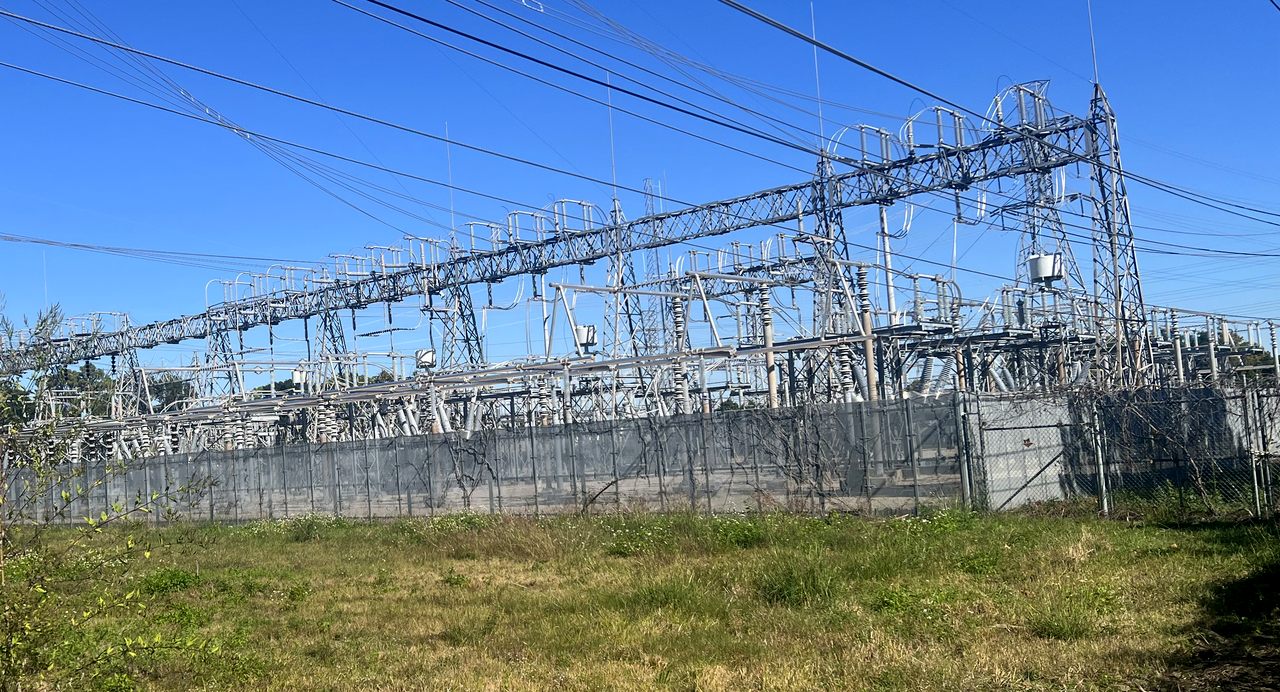
As CenterPoint Energy prepares for unprecedented electricity demand, Houston faces a defining question: Will billions in infrastructure investment make electricity more affordable and reliable—or leave existing households and businesses paying more?
Houston is entering a new era of electricity demand, and the numbers are extraordinary.
On October 27, 2026, CenterPoint Energy announced an updated $38.7 billion capital investment plan for 2026 through 2030, while preparing for approximately 14 gigawatts of potential additional large-load electricity demand in the Greater Houston area.
To put that demand in perspective, 14 gigawatts equals 14,000 megawatts—an enormous amount of electrical capacity that would require careful planning, connections, and reliable service if the projects proceed.
One important distinction: The $38.7 billion represents CenterPoint's company-wide capital investment plan across its operating businesses, not spending exclusively on Houston's electric grid. And proposed electricity demand is not the same as electricity already being consumed.
Nevertheless, the Houston region is a major driver of the company's accelerating investment strategy. New transmission lines, substations, distribution infrastructure, and grid modernization projects could become essential parts of that expansion.
But here's the question we should be asking:
Will Houston's expanding electricity infrastructure lower the cost of serving existing customers—or will households and businesses end up paying more to accommodate the energy demands of major new developments?
This is not simply a question about electricity rates. It is about economic development, infrastructure investment, corporate responsibility, public accountability, and the kind of energy future Houston wants and needs to build.
THE ECONOMIC DEVELOPMENT OPPORTUNITY IS REAL
Houston has long been recognized as an energy capital. Its industrial infrastructure, petrochemical operations, port facilities, engineering expertise, and expanding technology sector have positioned the region for continued growth.
Now, data centers, artificial intelligence, advanced manufacturing, and industrial electrification are adding new dimensions to Houston's electricity needs. These developments can bring substantial economic benefits.
Major investments can expand the tax base, support construction activity, create employment opportunities, and strengthen the region's position in an increasingly technology-driven global economy.
They can also generate additional electricity revenues that may help spread certain infrastructure costs across a larger customer base. We should welcome responsible economic development. But welcoming investment does not mean abandoning the responsibility to ask difficult questions about who benefits and who pays.
The issue is not whether Houston should grow. The issue is whether that growth creates shared prosperity—or shifts an unreasonable share of its infrastructure costs onto existing customers.
THE ARGUMENT THAT GROWTH CAN LOWER ELECTRICITY COSTS
CenterPoint's leadership has presented an important argument: bringing large new electricity customers onto the system can help spread fixed infrastructure costs across a larger customer base.
That argument deserves serious consideration.
Electric utilities operate extensive networks of transmission lines, substations, poles, transformers, and other equipment. Many of these costs exist regardless of how much electricity an individual customer consumes.
When additional customers connect and contribute revenue, some of those fixed costs can be shared more broadly.
CenterPoint has projected approximately $5 billion in savings for Texas residential and commercial customers over the next decade associated with anticipated growth.
If those savings materialize, they would represent a meaningful benefit. But a projection is not a guarantee. The financial outcome depends on how much new infrastructure must be built, whether projected customers actually connect, how much electricity they use, and how costs are allocated among customer groups.
An October 2026 analysis by the Energy Systems Integration Group and The Brattle Group reinforces this point. The researchers examined how large electricity users—including data centers—could affect rates for existing customers under different market conditions.
Their findings showed that large electricity customers can lower rates under some circumstances and raise them under others. The difference depends on available grid capacity, market structure, accurate demand forecasts, and the design of electricity rates and cost-allocation rules.
In one modeled scenario, sufficient existing system capacity allowed a new large customer to lower rates for existing customers by approximately 6% on average over the contract period. But when additional infrastructure was needed, the modeled costs could increase rates instead.
These were illustrative scenarios, not predictions for CenterPoint or Houston. The lesson is straightforward.
Adding large customers is not automatically good or bad for electricity affordability. The outcome depends on the economics—and the rules.
WHEN NEW DEVELOPMENT CREATES NEW COSTS
Imagine a large data center proposing to locate in the Houston region. The project may promise substantial private investment, construction employment, and long-term economic activity. But the facility could also require new transmission capacity, substations, transformers, and other equipment to accommodate its electricity demand.
Some infrastructure improvements may benefit the broader electric system. Others may be necessary primarily because of that particular development. That distinction matters.
If a new customer pays an appropriate share of the costs it creates, the investment may benefit the entire system. But if infrastructure is constructed for projected demand that never materializes—or if a major customer leaves before the investment is recovered—other customers could face financial exposure.
This is often described as the risk of stranded infrastructure costs. The concern is particularly important for large-load developments because their electricity requirements can be enormous, construction schedules can change, and long-term operations may evolve with technology and market conditions.
Texas regulators have begun addressing these issues through changes to the large-load interconnection process.
In June 2026, the Public Utility Commission of Texas approved ERCOT's Batch Zero process for studying qualifying large electricity users seeking to connect to the grid. The process groups certain large projects together so ERCOT can evaluate their combined reliability impacts, available transmission capacity, and potential infrastructure needs.
That is an important planning step.
But determining whether the grid can accommodate a new customer is not the same as determining who should ultimately pay for every associated investment.
A stronger planning process is valuable. Financial accountability must be part of the conversation, too.
WHO DECIDES WHAT CUSTOMERS PAY?
To understand the issue, Houston residents need to understand something about how the electricity system works. In most of the Houston area's competitive retail electricity market, customers purchase electricity from retail electric providers.
CenterPoint is a transmission and distribution utility. It operates the regulated transmission and distribution infrastructure that delivers electricity to homes and businesses, which is why they can charge a transmission and distribution utility fee, called a TDU fee. That means your electricity bill reflects more than the price of generating electricity. It also includes the costs of maintaining, operating, and investing in the infrastructure that delivers that electricity.
Again, for perspective, in 2020, CenterPoint per kilowatt hour delivery rate was 4.05 cent per kilowatt hour plus a $4.90 monthly fee. In 2026, the per kilowatt hour rate is 6.41 cent plus the $4.90 monthly fee. For customers using 2.000 kilowatt hours of electricity each month, the difference in the increased rate amounts to about $566 per year.
CenterPoint has said that when it invests in infrastructure, they are not allowed to earn a regulated return on that investment, that those capital costs are recovered gradually over time, typically over decades. They also state that day-to-day operating and maintenance cost are passed through to customers without a profit.
The Public Utility Commission of Texas plays a central role in regulating CenterPoint's delivery rates and reviewing the recovery of eligible utility costs. In 2025, CenterPoint requested 10 rate increases. The PUCT approved 9 of the 10 requests. The utilities’ next rate request is expected in March 2029.
ERCOT coordinates wholesale electricity markets and grid operations across most of Texas and plays an important role in evaluating large-load interconnection requests.
Texas lawmakers establish many of the laws under which these organizations operate. These institutions have responsibilities that directly affect what customers ultimately pay. But their decisions can be technically complex and difficult for ordinary residents to follow.
That is why transparency matters.
Customers should be able to understand how much infrastructure investment is being driven by new large-load developments, what those developments are expected to contribute, and what financial protections exist if projects are delayed, canceled, or substantially reduced.
They should also understand the difference between projected savings and savings that actually appear in electricity costs. Public participation should not be limited to experts who understand every detail of utility regulation.
The people who pay the bills have a legitimate interest in how those bills are determined.
RELIABILITY MUST BE PART OF THE CONVERSATION
Affordability is only one side of Houston's electricity challenge. Reliability is equally important. Houston residents understand what prolonged electricity outages can mean. During extreme heat, hurricanes, and severe storms, losing electricity is more than an inconvenience.
It can threaten public health, disrupt businesses, damage property, and interrupt essential services. CenterPoint's planned investments in transmission, distribution, and grid modernization could strengthen the system's ability to serve growing demand and withstand certain operational challenges.
Those improvements deserve consideration on their merits. But expanding capacity to serve more electricity demand is not necessarily the same thing as improving resilience against hurricanes, flooding, fallen trees, or prolonged outages.
We should also note that, according to the Energy and Policy Institute, utilities benefits when they propose major infrastructure projects because those investments are included in the utility’s rate base.
A transmission project that helps deliver electricity to a new industrial facility may serve a different purpose from an investment that strengthens neighborhood distribution lines or provides backup power to a community center.
Some investments may accomplish both objectives. Others may not. Houston needs economic growth and resilience. The public should be able to distinguish between investments intended to accommodate new demand and investments intended to improve reliability for existing customers. And we should be able to measure the results.
Are outages becoming less frequent? Are restoration times improving? Are critical facilities better prepared? Are neighborhoods that have historically experienced significant service disruptions receiving meaningful improvements?
Those are questions worth asking as billions of dollars are committed. Because reliability should not be measured only by how much electricity the system can deliver under normal conditions. It should also be measured by how well the system performs when communities need it most.
ARE WE MAKING THE MOST OF THE INFRASTRUCTURE WE ALREADY HAVE?
There is another dimension to Houston's electricity challenge that deserves more attention. Before assuming that every increase in electricity demand requires an equivalent expansion of traditional infrastructure, we should ask whether existing systems can be used more efficiently.
Energy efficiency, demand response, smart building controls, distributed solar, and battery energy storage can sometimes reduce peak demand, lower operating expenses, or defer certain infrastructure investments.
For example, commercial buildings may be able to reduce electricity consumption during peak periods through improved HVAC controls and equipment scheduling.
Battery storage may help manage demand at selected facilities while providing backup power when designed with the appropriate equipment and operating capabilities. Distributed solar can reduce purchased electricity under suitable conditions.
Large electricity users may also be able to adjust some operations during periods when the grid is under pressure, depending on their technical requirements.
These approaches are sometimes described as demand flexibility—the ability to change when or how electricity is consumed without necessarily reducing the value of the service being provided. These technologies are not universal substitutes for transmission lines, substations, or new generation.
Their effectiveness depends on location, timing, cost, engineering, and system needs. But they deserve serious consideration alongside conventional infrastructure investments.
That raises an important planning question:
Before approving expensive new infrastructure, have we evaluated whether existing assets, better operating practices, or other technologies could meet part of the need at a lower overall cost?
The goal should not be to build less infrastructure at any cost. The goal should be to invest in the right infrastructure, at the right time, for the greatest long-term public benefit.
What About Houston’s Most Vulnerable Communities?
Electricity affordability affects every household and business, but the consequences are not distributed equally. For families with limited disposable income, higher electricity bills can force difficult choices between utilities, groceries, medication, transportation, and other essential expenses.
Small businesses may have less financial flexibility to absorb rising operating costs. And communities that experience repeated outages may face economic losses and public-health risks that are not fully captured by conventional utility investment calculations.
These realities should be part of the discussion when major infrastructure investments are evaluated. A successful energy expansion should not be measured only by the number of megawatts connected or dollars invested.
It should also be measured by whether residents can afford electricity, whether essential services remain available during emergencies, and whether local communities participate in the economic opportunities being created.
That includes workforce training, skilled employment, contracting opportunities, and investment in neighborhoods that may otherwise see little direct benefit from major infrastructure projects.
Houston has an opportunity to connect electricity infrastructure expansion with broader community development. But those benefits should be identified, measured, and evaluated—not simply assumed.
Economic growth and community well-being should reinforce one another.
Five Questions Houston Should Be Asking
As CenterPoint's investment program moves forward, Houston residents, business leaders, policymakers, and regulators should expect clear answers to five questions.
1. How much of the planned infrastructure investment is necessary to serve new large electricity customers? Understanding the difference between growth-related infrastructure, routine system upgrades, and resilience investments is essential.
2. What financial commitments are large-load customers making? Customers should understand whether developers provide financial security, minimum-payment commitments, or other protections against infrastructure costs being shifted to existing users.
3. How will the projected customer savings be measured and verified? CenterPoint's anticipated savings deserve transparent assumptions, periodic reporting, and comparisons with actual results.
4. Are lower-cost alternatives being evaluated before major investments are approved? Energy efficiency, demand flexibility, storage, and grid-enhancing technologies should be considered where they can provide reliable and cost-effective alternatives or complements.
5. How will existing neighborhoods and small businesses benefit? Investment plans should include measurable outcomes for affordability, outage performance, critical facilities, and community economic opportunity.
These are not unreasonable demands. They are fundamental questions of responsible infrastructure planning.
HOUSTON HAS AN OPPORTUNITY TO LEAD
Houston is entering a period of extraordinary electricity demand growth. The decisions made over the next several years will influence the region's economic competitiveness, infrastructure reliability, household energy costs, and long-term resilience.
CenterPoint Energy, ERCOT, state regulators, industrial customers, local governments, and communities all have important roles to play.
No single institution can solve these challenges alone. And no single technology provides all the answers.
Houston should welcome responsible investment, support the infrastructure necessary for growth, and encourage innovation that makes the electricity system more efficient and reliable. But should also insist on transparency, accountability, and a fair distribution of costs and benefits. Because the success of Houston's energy expansion should not be measured only by how much electricity the system can deliver.
It should be measured by how well that electricity system serves the people who depend on it.
The real question is not simply who will build Houston's energy future.
It is who will benefit from it, who will pay for it, and who will have a voice in the decisions that shape it.
That is a conversation Houston needs to have now.
That's Real Talk. No hype. No political spin. Keeping it 100.
POWER UNFILTERED
Clean Energy. Real Talk.
What Do You Think?
Should large electricity users be required to make stronger financial commitments before utilities build infrastructure to serve them? And how should Houston measure whether these investments actually improve affordability and reliability for existing customers?
Follow us. Ask questions. Join the conversation.
GO DEEPER: CHECK IT OUT FOR YOURSELF
These sources provide additional information on the investment plans, research, and regulatory processes discussed in this article.
• CenterPoint Energy — October 27, 2026 Earnings Announcement and Capital Investment Outlook
• CenterPoint Energy — October 2026 Investor Materials and SEC Filing
• Energy Systems Integration Group — Large Loads and Electricity Rate Impacts, October 2026
• The Brattle Group — New Report on Large Electricity Customers and Rate Impacts
• ERCOT — PUCT Approval of the Batch Zero Large-Load Process, June 2026
• S&P Global — CenterPoint's Capital Spending Plan and Large-Load Growth, October 2026
© 2026 Power Unfiltered. All rights reserved. Content reuse and licensing
Join the discussion
0 commentsComments are read and approved before they appear. Disagree all you like — keep it about the argument.
No comments yet. Ask the first question.