
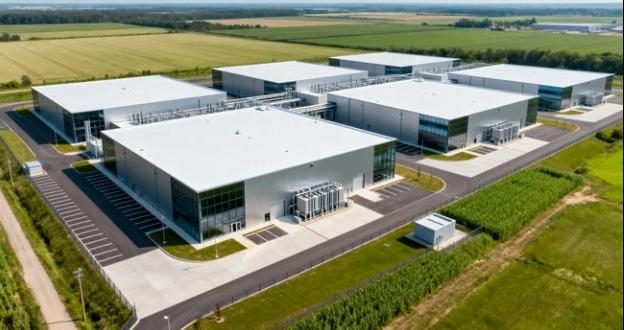
When a company or developer proposes building a data center in a community, the conversations are frequently very polarizing.
Supporters talk about economic investment, construction jobs, tax revenue, and the infrastructure powering our increasingly digital world. Opponents raise concerns about electricity costs, water consumption, noise, environmental impacts, and whether local residents will receive a fair share of the benefits.
Both sides are raising valid questions worth examining. But neither a developer's promise of economic growth nor a resident's fear of higher costs tells us everything we need to know about a particular project.
The real question isn't simply whether a community should welcome a data center. It's whether the community understands the full proposal, the public costs, the expected benefits, and the commitments being made before decisions are finalized.
And that's an opportunity and conversation every community resident should be able to participate in. It’s a good start. But simply having a conversation is not enough. The real opportunity is the ability to completely understand the project and exactly what is being proposed.
Start With the Deal, Not the Sales Pitch
I’ve said this before. A data center is more than just a building filled with computer equipment. It may depend on its size and design, but they almost always require substantial electricity infrastructure, cooling systems, water services, roads, and other support infrastructure.
The developer has a role to play in engaging and working with communities to ensure they understand exactly what is being proposed. Yes, they may be investing billions of dollars in the project. But the amount invested does not, by itself, tell a community whether the deal is beneficial.
Residents deserve to understand what the investment will deliver locally, what resources it will require, what public assistance it will receive, and who will be responsible for the costs. Consider evaluating the specific project—don’t accept or reject every data center based on what happened somewhere else. The responsible approach is to understand what is being proposed and the questions that should be asked and answered.
These details matter. Because a project can generate substantial economic interest while still creating unresolved questions about affordability, local services, or quality of life. The goal should be to make sure everyone understands exactly what is being proposed.
1. Who Pays for the Electricity Infrastructure?
This may be the most consequential financial question for the public.
Large data centers can require new substations, transmission upgrades, additional power generation, and other infrastructure. The requirements depend on the facility, its location, its electricity supply arrangements, and the capacity already available. But here's an important distinction: a new data center does not automatically mean every nearby household's electricity bill will increase.
The actual effect depends on how the electricity system serves the facility, how costs are allocated, the applicable utility rates, and what protections are in place for other customers. The concern arises when new infrastructure is needed but the financial responsibility is unclear—or when other customers could be left bearing costs associated with a large project's delays, cancellation, or reduced electricity use.
Federal regulators are examining cost transparency and customer protections for large electricity users in some parts of the United States. The Federal Energy Regulatory Commission's (FERC) 2026 large-load proceedings highlight why the costs and responsibilities associated with connecting major new users deserve scrutiny.
For communities considering a data center, the practical questions are straightforward: What new infrastructure is required? What will it cost? Who is contractually responsible for paying? And what happens if the project changes or does not use as much power as originally projected?
These answers should be documented—not left to interpretation or assumptions.
2. What Will Happen to Local Water and Quality of Life?
Electricity isn't the only resource that deserves attention. Data centers must manage heat generated by their equipment. Cooling methods vary, and the amount of water a facility consumes can differ considerably depending on its design, size, climate, technology, and operating practices.
That is why general statements that all data centers use the same amount of water—or have identical environmental impacts—aren’t helpful. A community needs information about the proposed facility. How much water will it require during normal operations and peak demand? Where will the water come from? Will the project use reclaimed water where practical? What happens during a drought or local water shortage?
Residents should also ask about noise from cooling equipment, backup generators, lighting, construction traffic, air emissions, waste heat, and the distance between the facility and nearby homes.
These are not reasons to assume a project is unacceptable. They are reasons to require a site-specific assessment, meaningful public disclosure, and an explanation of how potential impacts will be prevented or managed. Where monitoring or operating limits are promised, residents should ask how compliance will be measured and who will respond when a problem occurs.
3. What Does the Community Actually Receive?
Economic development announcements often emphasize the size of the investment being made in a community. But the amount a company spends building a facility is not the same as the benefit the surrounding community receives. Consider these three different concerns:
Construction employment. Building a large facility can create substantial temporary employment and opportunities for contractors. Those jobs matter, but many end when construction is complete.
Permanent employment. Operating and maintaining a data center requires a different skilled workforce. Communities should know how many long-term jobs are expected, what skills they require, what the jobs pay, and how local residents can qualify.
Public revenue. Property taxes and other revenue may help fund public services. But the relevant figures are the expected public benefit after accounting for tax incentives, infrastructure obligations, and other costs over the life of the project.
If a developer receives a tax exemption, grant, or other public assistance, residents should be able to find out what is being offered and what the community is expected to receive in return. The same principle applies to local hiring, workforce training, apprenticeships, and opportunities for small businesses.
A credible economic development plan should explain not just how much money is coming into the area, but how that money will be spent and how the benefits will reach the people who live there.
4. Are the Promises in Writing?
This is where the rubber meets the road. This is where a project's public presentation must be separated from its actual commitments. A company may announce a community investment fund, workforce initiative, scholarship program, infrastructure improvements, or other benefits. Those efforts can be valuable, but residents should understand exactly what has been promised---and what’s been put in writing.
A Community Benefits Agreement is one tool that can establish specific commitments between a developer and a community or its representatives. Depending on the project and agreement, it can address local hiring, workforce development, infrastructure, environmental monitoring, public reporting, or other community priorities.
But the important details are who signs the agreement, what the parties are obligated to deliver, how progress will be measured, and what happens if commitments are not met.
Research from the Brookings Institution on Community Benefits Agreements emphasizes transparency, collaboration, measurable benefits, and accountability. The Federation of American Scientists' 2026 Guide for Local Governments also examines data-center agreements and how communities can better evaluate proposed projects.
A press release is not the same as an enforceable commitment. A charitable donation is not necessarily a substitute for addressing the project's direct impacts. And an agreement that cannot be monitored or enforced offers little assurance that a promise will be fulfilled. Communities should ask for specific, measurable commitments that can be evaluated and enforced over time.
5. Does the Public Have a Meaningful Voice?
Residents often become aware of a proposed development after the fact, when a public meeting is approaching, land-use decisions are underway, or a local incentive package is being considered. By that point, some important decisions are probably already in motion.
Meaningful engagement should begin early enough for the community's questions and concerns to influence the proposal. That requires access to relevant information, clear explanations, opportunities to ask questions, and a realistic understanding of which decisions remain open.
Residents should be able to learn who is developing the project, what approvals are required, what studies have been conducted, what public incentives are under consideration, and how to submit comments before decisions are made.
Transparency matters particularly when confidential negotiations or non-disclosure agreements limit what officials can share. The public should be able to see as much relevant information as the law permits, especially when public resources or community impacts are involved.
In Texas, for example, the authority of local governments to shape or stop a particular project can vary with the location, approvals required, utility arrangements, and applicable law. Residents should not assume that one city council vote controls every aspect of a data center's development.
A February 2026 Texas Tribune report on data-center development and local authority provides useful context on these challenges. The practical lesson is to identify which agencies and officials have responsibility for each decision—and engage them before the process is complete.
Texas Is Asking Many of These Questions Now
This is not merely a theoretical discussion. If you recall, we talked about this in our article, What Do Data Centers Have to Do with My Electricity Bill? My Community? Governor Abbott of Texas directed the Public Utility Commission of Texas (PUCT) and the Electric Reliability Council of Texas (ERCOT) to gather information about the effects of qualifying proposed data centers on the state and local communities. The Texas Governor recently expanded the audit to include the Texas Water Development Board and the Texas Commission on Environmental Quality.
The scope of the state's request is specific: it covers qualifying proposed facilities, including certain projects seeking at least 25 megawatts of power, rather than every data center in Texas. ERCOT’s deadline was October 12th and it expects to publish its findings in December.
Also, the commission is reportedly developing new rules related to how large-load projects would pay for the transmission infrastructure needed to serve their facilities. If adopted, the proposed rules would protect customers from paying for large-load interconnection and improve grid planning.
That review is important because it focuses on the issues communities need to evaluate: the resources a project requires, the public assistance it receives, and the effects it may have beyond the property line. As its findings become available, Texans will have an opportunity to assess what the information reveals—and what additional questions may remain unanswered.
Residents can follow the process through ERCOT's Data Center State and Community Impact information page.
The Long-Term Question: Who Is Accountable?
A data center can operate for many years. Its energy requirements, cooling systems, ownership, and business plans may change during that time. A responsible review should therefore look beyond construction and opening day.
What happens if the facility expands beyond its original plans? What if promised investments or jobs do not materialize? Who addresses recurring noise or environmental problems? What happens to the site if the facility eventually closes?
These are questions of accountability.
Real talk. What gets economic development officials and politicians excited: money. Companies and developers are investing billions of dollars in data center development, and for good reason. These projects bring significant capital investment, generate substantial tax revenue to support schools, roads, and public services, and create jobs.
The challenges of integrating data centers into urban environments are real, they place real demands on a community’s electric grid, water supply, land, and environmental resources. Communities must also contend with noise pollution and toxic electronic waste.
At the same time, data centers are essential to today’s digital infrastructure. They provide secure, reliable data storage and processing, enabling seamless business operations and supporting the cloud services we increasingly depend on.
Public officials and residents should consider whether approvals, agreements, monitoring arrangements, financial protections, and closure plans adequately address long-term responsibilities. A community should not have to rely solely on a developer's goodwill to protect its interests. Important obligations should be documented, and responsibility for meeting them should be clear.
Before the Decision Is Made: 10 Questions Every Community Should Ask
Whether you are a homeowner, renter, small-business owner, parent, neighborhood advocate, or elected official, these questions can help move the discussion beyond slogans and into specifics.
1. Who is actually behind this project?
Who owns the development, who will operate the facility, and who has ultimate control? Are the responsible companies and decision makers publicly identified?
2. How much electricity will the facility require?
What is its expected power demand when it opens, and what will demand be if the entire project is built? Will the facility receive power from the grid, on-site generation, or a combination?
3. Who will pay for the electricity infrastructure?
What new power lines, substations, generation, or other upgrades are needed? What costs are assigned to the developer, and what protections prevent households and other customers from being left with costs if the project is delayed, downsized, or canceled?
4. How much water will the project use, and where will it come from?
What are its expected annual and peak water needs? What cooling technology will it use? How will it respond to droughts, water restrictions, or competing community needs?
5. What will the facility mean for nearby residents?
What studies have been completed on noise, waste heat, lighting, backup-generator emissions, traffic, and other local impacts? What operating limits, monitoring procedures, and complaint-response arrangements will be in place?
6. What public incentives and resources will the project receive?
Will it receive tax abatements, grants, publicly funded infrastructure, discounted services, or other assistance? What is the estimated net public benefit after accounting for incentives and the cost of providing services over time?
7. How many jobs will actually be available to local residents?
How many jobs will exist during construction, and how many will remain once the facility is operating? What wages, skills, training, apprenticeships, local hiring opportunities, and contracts for local businesses are expected?
Developers should consider working closely with schools, universities, and community organizations to create pathways to jobs and careers and transferable skills that strengthen the industry’s future workforce and bring value to the community.
8. What specific benefits will the surrounding community receive?
Will there be investments in workforce development, schools, infrastructure, public services, or other local priorities? Were residents involved in identifying those priorities, and are the promised benefits measurable?
9. Can residents review the information and participate before decisions are finalized?
Are relevant project studies, incentive proposals, and agreements available to the public? Which officials or agencies are responsible for the approvals, when will decisions be made, and how can residents submit questions or comments?
10. What happens if the developer fails to keep its promises—or eventually leaves?
Are key commitments documented in enforceable agreements? Who will monitor performance, what remedies apply if obligations are not met, and how will closure, cleanup, and other long-term responsibilities be funded?
BOTTOM LINE
A data center should not be judged solely by the size of the investment or the volume of the opposition. It should be judged by the facts of the project, facts on the ground, the fairness of the agreements, the transparency of the process, and the accountability of the people making the commitments.
Communities do not have to choose between welcoming economic opportunity and asking tough questions. They deserve the information necessary to do both. Keep in mind: A project that is proposed may still be subject to approvals, negotiations, and changes.
The issue should not be about choosing between technological competitiveness and better environmental and economic outcomes. The greater opportunity is to achieve both—to build the technological infrastructure necessary to compete in the global economy while creating greater value for the people and communities these developments serve. How we balance these priorities will determine our ability to turn the growing demand for data centers into better outcomes for everyone.
Data centers can be good neighbors and exist with communities by being transparent, dropping controversial nondisclosure agreements (NDAs), creating innovative designs that balance aesthetics, sustainability, and community impact, and contribute positively to the communities they serve.
And that’s keeping it 100. No hype. No political spin.
POWER UNFILTERED
Clean Energy. Real Talk.
Follow us. Ask questions. Join the conversation.
powerunfiltered.com
© 2026 Power Unfiltered. All rights reserved. Content reuse and licensing
Join the discussion
0 commentsComments are read and approved before they appear. Disagree all you like — keep it about the argument.
No comments yet. Ask the first question.